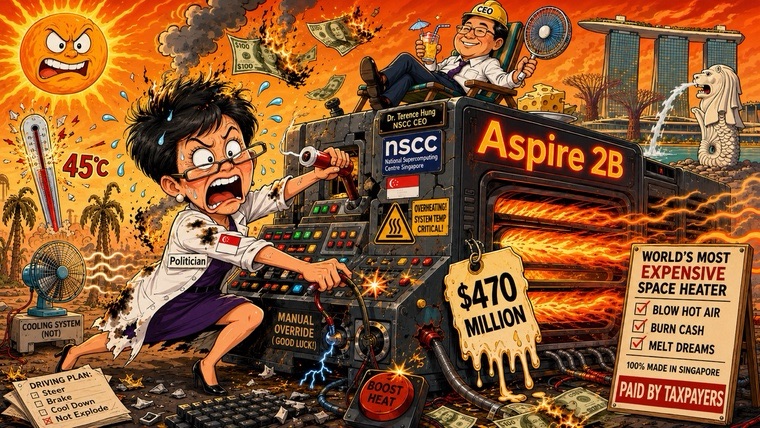
Singapore Built a $470M Supercomputer. Nobody Knows How to Drive It.
How Aspire 2B Became the Most Expensive Space Heater on the Equator

How Aspire 2B Became the Most Expensive Space Heater on the Equator
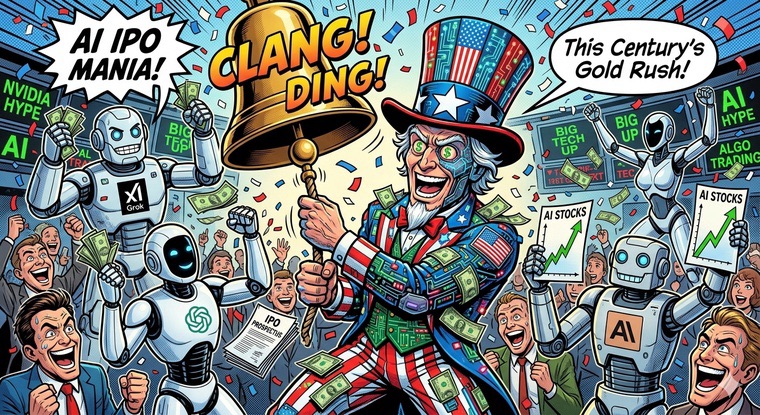
Three companies worth more than $3 trillion combined want to go public in the next nine months. SpaceX is targeting June 12, 2026. Anthropic filed confidential IPO papers on June 1 for the fall. OpenAI is expected to follow in early 2027. Together, they plan to raise more than $170 billion from public investors. [1][2] For context, every single IPO in the United States last year raised a total of $47 billion. [3] That includes biotech, industrials, and everything else. This is the most important financial story of 2026. Here is what is happening, why it matters, and what to do about it. The Rules Were Changed for This Multiple index providers have adjusted their rules in anticipation of these IPOs. The changes are not coincidental. They are structural. Nasdaq led the way. On March 30, 2026, the Nasdaq approved a new “fast entry” rule for its flagship Nasdaq 100 index, effective May 1. [4] Under the old rules, a newly public company had to trade for three to twelve months before it could join the index. This “seasoning period” was designed to let the market establish a fair price before forcing index funds to buy. Under the new rules, mega-cap IPOs can be added after just 15 trading days. [4][5] The fast entry rule applies only to the largest IPOs — companies that would rank within the top 40 holdings of the Nasdaq 100. At the end of February, that required a market capitalisation of roughly $113 billion. SpaceX, OpenAI, Anthropic, Stripe, and Databricks could all qualify. [4] Nasdaq also restructured its 10% minimum free float requirement. Previously, stocks that did not meet the threshold could be excluded. Under the new rules, low-float stocks are no longer strictly excluded; instead, their weighting in the index is reduced. [4] In practice, this means SpaceX can sell only a small fraction of itself to the public and still enter the index. Companies with free floats up to 33.3% can now be weighted up to three times their prevailing float. [5] The total value of assets tracking the Nasdaq 100 through ETFs alone was $527 billion across 63 funds as of December 2025. [5] The figure is many times larger when institutional mandates and pension funds are included. SpaceX reportedly made fast-track index inclusion a condition for listing on the Nasdaq rather than the New York Stock Exchange. [6] FTSE Russell followed. It shortened its post-IPO seasoning window to just five days and is considering relaxing its already-low 5% minimum float requirement for large IPOs. [4][5] S&P Dow Jones Indices is reportedly weighing whether to halve its 12-month waiting period to six months and abandon its four-quarter profitability requirement. This would be a watershed moment for the S&P 500, which has historically been reluctant to change its inclusion rules. [4][5] CRSP, whose indexes underpin more than $3 trillion in Vanguard fund assets, already allows IPOs after five trading days and is easing its float requirements further. On April 27, it added a float-adjusted market-capitalisation test specifically to accommodate mega-IPOs with limited available shares. [4] The trend is clear and uniform. Every major index provider has moved, or is moving, to accelerate entry for these companies while relaxing the rules that would normally protect index fund investors from low-float volatility. The Problem Here is the chain of events. SpaceX goes public in June, selling a sliver of itself. The typical IPO sells 15 to 25% of the company. SpaceX is reportedly selling far less. [1] Within three weeks, Nasdaq adds it to the Nasdaq 100. Every fund tracking that index must now buy SpaceX stock. Those funds compete with each other to buy from a pool of shares that represents just a fraction of the company. The price spikes not because of any new information about the company’s value, but because the buying is mandatory and the supply is artificially small. This is the Ticketmaster problem applied to the stock market. A concert with 200 seats and 250 buyers is normal. A concert with 10 seats and 10,000 buyers is a feeding frenzy. You are no longer paying for the music. You are paying for access. SpaceX alone expects to raise $75 billion from its offering. OpenAI and Anthropic each plan to raise $60 billion or more. [1][2]The market absorbed $47 billion in total IPOs last year. These three want roughly four times that amount at once. [3] Bloomberg Intelligence analysts have modelled the forced buying wave. If all three companies sell limited shares and get fast-tracked into major indexes, the wave of buying could swallow a majority of all tradeable shares in a short period. [1] The math does not work. Everyone involved knows it. The question is who absorbs the difference. The Insiders’ Exit Strategy There is a lockup period after an IPO. Founders, early employees, and investors who own the vast majority of shares are typically not allowed to sell them for 90 to 180 days. The rule exists to prevent insiders from dumping all their stock on day one. [1] When that lockup expires, the vast majority of SpaceX that was not available starts flowing into the public market. Supply goes from a trickle to a firehose. And the people selling are the insiders who got in at a fraction of the public price. A venture capital firm that invested in SpaceX years ago at a much lower valuation is sitting on enormous returns. They will sell. That is their entire business model. The buyers on the other side are the index funds. Which are your retirement savings. The automatic demand that was built into the stock in week three is now absorbing insider sales at whatever price the market offers. Why the Companies Need This So Badly OpenAI reported $13.1 billion in revenue for 2025 but posted an estimated net loss of $9 billion. [7] Its annual spending is projected to hit $17 billion in 2026, $35 billion in 2027, and $45 billion in 2028. [8] The company does not

We expect lots more AI efficiency news to create new jobs headlines flying in our digital domains and publications.
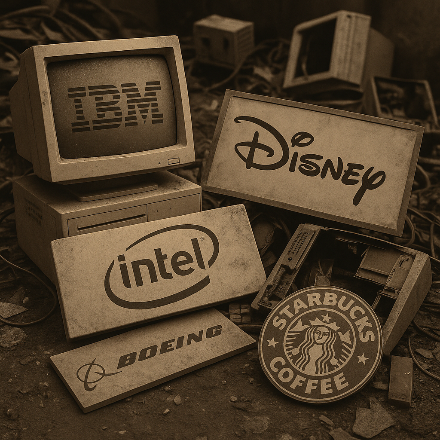
In today’s rapidly evolving business landscape, even the most iconic companies can find themselves struggling to stay relevant. Market shifts, technological disruptions, and changing consumer behaviors have left several household names teetering on the edge of irrelevance. Here are five famous companies that desperately need to reinvent themselves before it’s too late. Intel: The Chip Giant Losing Its Edge Once the undisputed king of processors, Intel has watched competitors like AMD and Apple’s M-series chips eat into its market dominance. The company’s manufacturing delays, failure to anticipate the mobile-first revolution, and sluggish response to AI computing demands have created an existential crisis. Intel needs to radically accelerate its innovation cycle, invest heavily in cutting-edge fabrication technology, and develop a clear AI strategy that goes beyond incremental improvements. Boeing: Grounded by Quality and Trust Issues The aerospace giant’s reputation has taken a nosedive following multiple safety scandals, most notably with the 737 MAX. What was once synonymous with engineering excellence now faces deep skepticism from regulators, airlines, and passengers. Boeing must prioritize safety culture over financial engineering, rebuild quality control systems from the ground up, and restore transparency with stakeholders. The alternative is watching competitors like Airbus and emerging Chinese manufacturers capture even more market share. IBM: The Legacy Giant Stuck in Transition Despite decades of attempting to reinvent itself, IBM remains trapped between its profitable but declining legacy business and its struggling cloud computing ambitions. While competitors like Amazon, Microsoft, and Google dominate cloud infrastructure, IBM’s hybrid cloud strategy hasn’t gained significant traction. The company needs to make bold decisions: either fully commit to becoming a specialized enterprise AI and quantum computing powerhouse, or accept a smaller role in the market. Half-measures will only prolong the decline. Starbucks: The Coffee Chain Losing Its Third Place Magic Starbucks built an empire on being the ‘third place’ between home and work, but that concept has eroded in the mobile-order, to-go culture. Long wait times, inconsistent quality across franchises, and fierce competition from local cafes and fast-food chains have dulled Starbucks’ edge. The company must rediscover what made it special: creating genuine community spaces, improving the in-store experience, and differentiating beyond convenience. Simply adding more menu items and rewards program tiers won’t solve the deeper identity crisis. Disney: The Magic Kingdom’s Identity Crisis Disney faces a perfect storm of challenges: streaming losses from Disney+, box office underperformance, theme park attendance concerns, and a bitter culture war that’s alienated portions of its audience. The company that once defined family entertainment now seems uncertain about its identity and audience. Disney needs to stop chasing every demographic and trend, return to storytelling excellence over franchise management, and develop a sustainable streaming strategy that doesn’t cannibalize its other businesses. The brand’s magic isn’t gone, but it’s fading fast. The Common Thread: Complacency Kills What unites these five companies is a dangerous combination of past success breeding complacency and an inability to see beyond quarterly earnings to address fundamental strategic challenges. Each has the resources, talent, and brand recognition to reinvent itself—but only if leadership acts with urgency and courage. In today’s business environment, hesitation is fatal. The choice is stark: reboot now, or face irreversible decline.
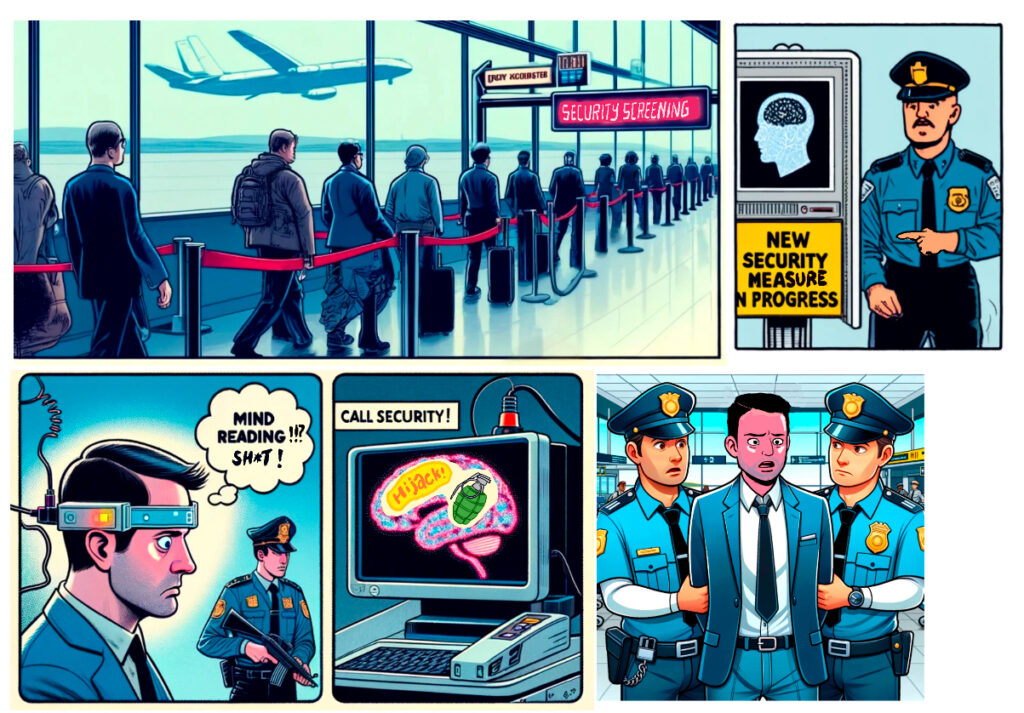
Is the existential crisis real with the evolution of Generative AI embedded into our lifestyle? Are there more benefits to quality of life or failed miserably to keep us satisfied?
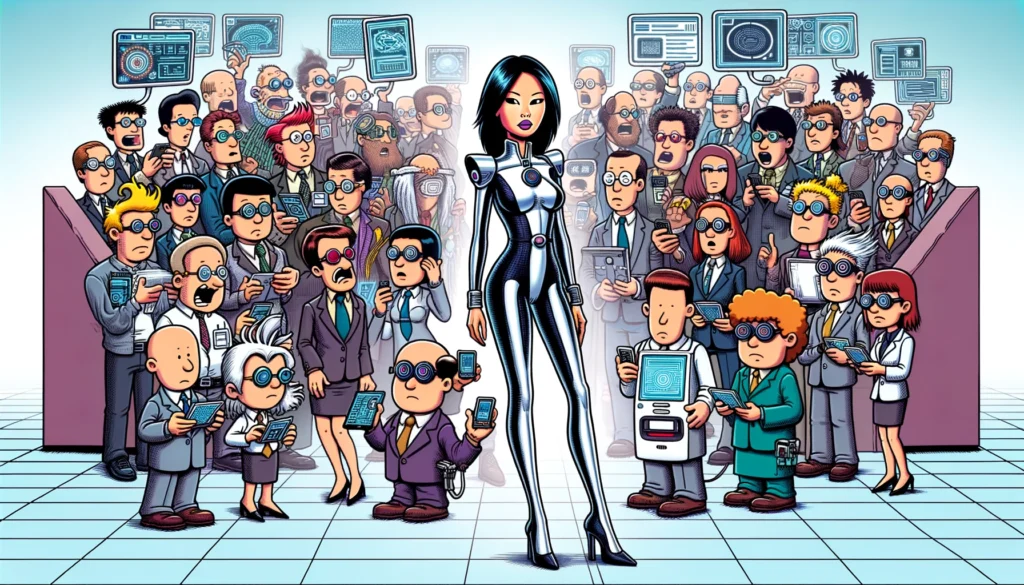
Imagine how our future of works will evolve in this AI dominance world with co-pilot automation that claim to give our quality of life back?